
Tropical Food Forest Design: What Works in Humid and Seasonal Tropics
Growing a tropical food forest is one of the most efficient ways to produce food in the humid tropics - if you design it for light, water, and soil life instead of planting “a jungle of trees.”
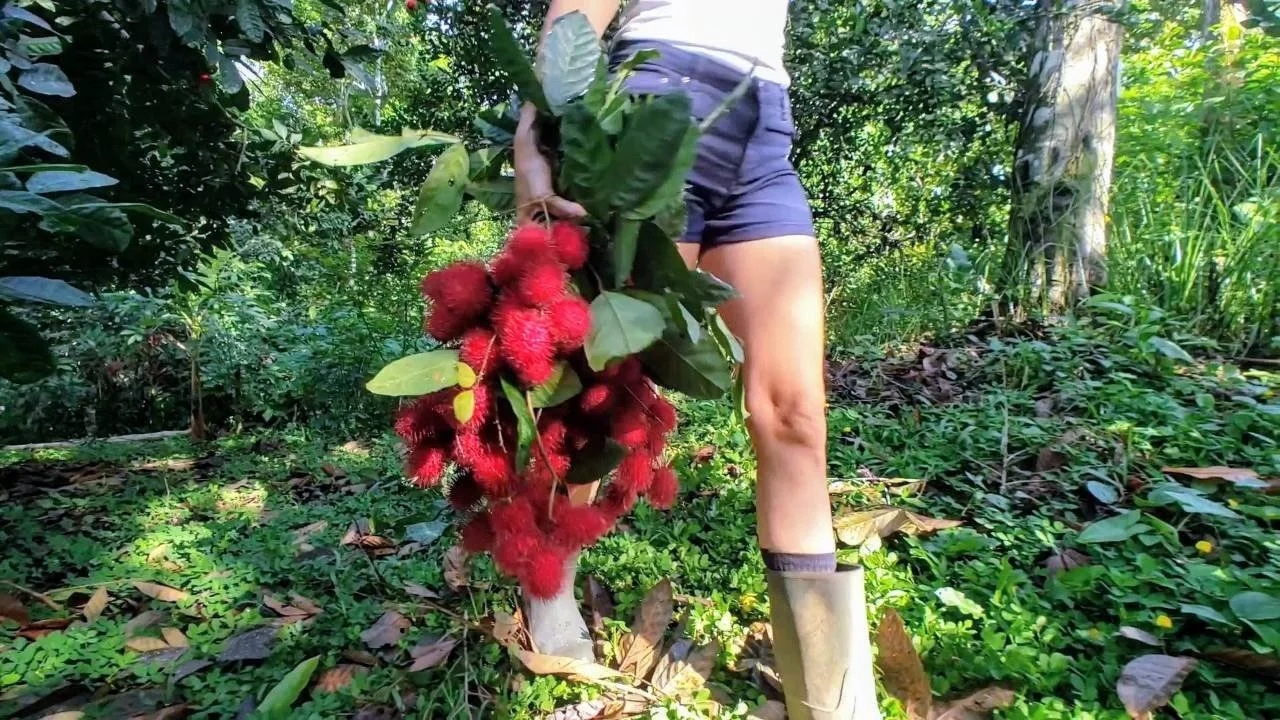
Why a Food Forest Works in the Tropics
In the humid tropics, everything grows fast, including weeds. This means that a good, tropical, food forest design isn’t about planting everything close together like a jungle; it’s about balance, spacing, and soil life.
On our 2,000 m² (½ acre) homestead, we’ve learned that spacing and access are everything.
In the tropics, production never really stops, so we need to be able to walk around easily to prune, harvest, and drop material year-round.
We keep enough space between trees for airflow (humidity brings disease), clear paths so it’s family-friendly, and designated zones for dropping prunings back as mulch. Those prunings are gold; they feed the soil, which feeds the trees.
A tropical food forest works because it functions like a forest, but scaled to human productivity.
Support species capture nitrogen, mine deep minerals, and build micro-habitats for soil life.
Once everything is properly spaced and designed, the system produces year-round without importing fertilizer or fighting nature.
From the Food Forest at Finca Tierra
What you read here isn’t theory. It’s the same tropical food forest system that feeds our family year-round and serves as a living classroom for sustainable design.
We developed this model at Finca Tierra Education Center in Costa Rica, a 9-acre off-grid permaculture campus we founded in 2008. Our food forest is integrated with vegetable, root, grain, and bean gardens, plus plant-protein and nutrient-dense shrubs such as chaya, katuk, cranberry hibiscus, and moringa. Together, they support a fully self-sufficient diet in the humid tropics.
Over the past 15+ years, we’ve trained more than 1,000 students from 40+ countries through Permaculture Design Courses, testing and refining these methods in real tropical conditions every season. This ongoing fieldwork is what makes our approach one of the most practical, proven, and scalable systems for growing food in the tropics.
Core Design Principles
Observe and design for light and water
Fruit trees need at least six hours of sun and prefer well-drained soil.
We avoid areas that stay flooded for more than three days, and we use the canopy to moderate stress during the dry season. Shade helps in the heat; pruning opens airflow during rain. It’s a rhythm that balances wet and dry.
Plant in layers
Our food forest has a gentle canopy that filters sunlight, a main fruit-tree layer, and a soft, walkable groundcover layer that suppresses weeds.
Groundcovers like perennial peanut work well early on; as the canopy closes and fertility rises, they naturally fade.
Each layer contributes to comfort and abundance.
Small & slow solutions (pruning = fertility)
We start with support species to create a microclimate and biomass.
Routine pruning builds soil over time. No big machinery, just small, routine yard maintenance.
Closed-loop nutrient cycling
Every pruning and leaf drop stays in the system.
Mulch decomposes into soil, and the next crop feeds on that fertility.
The result is a tropical agroforestry system that renews itself year after year.
The Main Trees That Feed Our Family
These are the trees that truly feed our family year-round in the humid tropics of Costa Rica. Each one plays a role in a complete tropical diet, providing calories, protein, fats, fruit, or everyday flavor.
We group our trees by function: calories and starches, fats and protein, fruits for nutrition and flavor, and a “snack layer.” Together, they provide energy, fats, protein, and vitamins for a complete tropical diet.
Staple Trees (Calories & Starches)
Breadfruit (Artocarpus altilis)
A foundation of our tropical diet. It’s essentially a potato that grows on a tree. Once mature, it yields over 100 kilos a year and produces for decades with almost no maintenance. We fry, roast, turn it into flour for baking, or simmer it in coconut milk for a creamy purée. Its mild flavor and soft texture make it as versatile as any root crop, while the tree shades the garden and helps retain soil moisture.
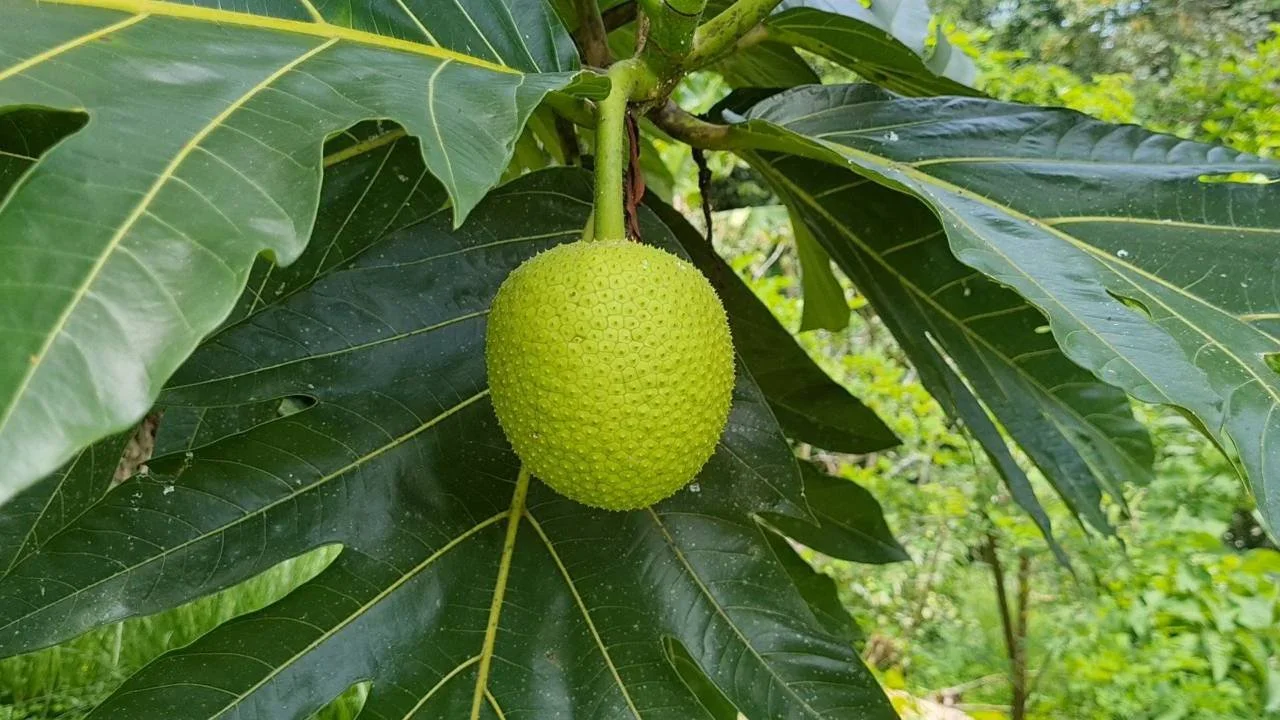
Breadnut (Artocarpus camansi)
The wilder cousin of breadfruit provides both protein and starch. Its chestnut-like seeds can be boiled, baked, made into a dip or cream, or ground into flour. Each tree gives over 50 kilos per year, often in several harvests. It’s one of our most sustainable plant protein sources, thriving without fertilizer or irrigation.
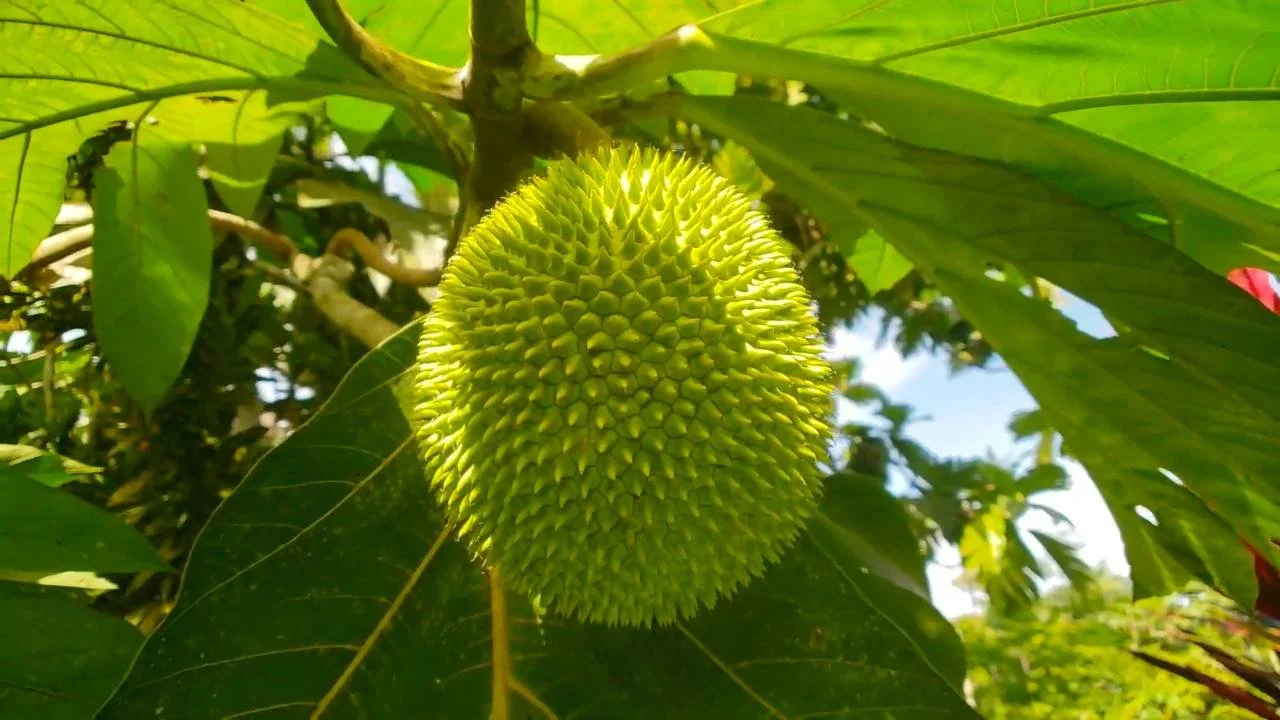
Banana & Plantain (Musa spp.)
The heart of the tropics. We grow dessert, date, ice cream, and plantain types, each fruiting two to three times per year. Bunches weigh around 20 kg, and trunks produce abundant biomass for mulch and compost. Green plantains fry like potatoes or can be turned into baking flour; ripe fruit caramelizes into desserts.
Fats & Protein
Coconut (Cocos nucifera)
Our all-purpose tree. It provides drinking water, milk, cream, and oil. Everything from hydration to cooking fat. Mature palms yield 50–70 nuts annually. We press our own oil, and even the husks and shells become mulch or charcoal.
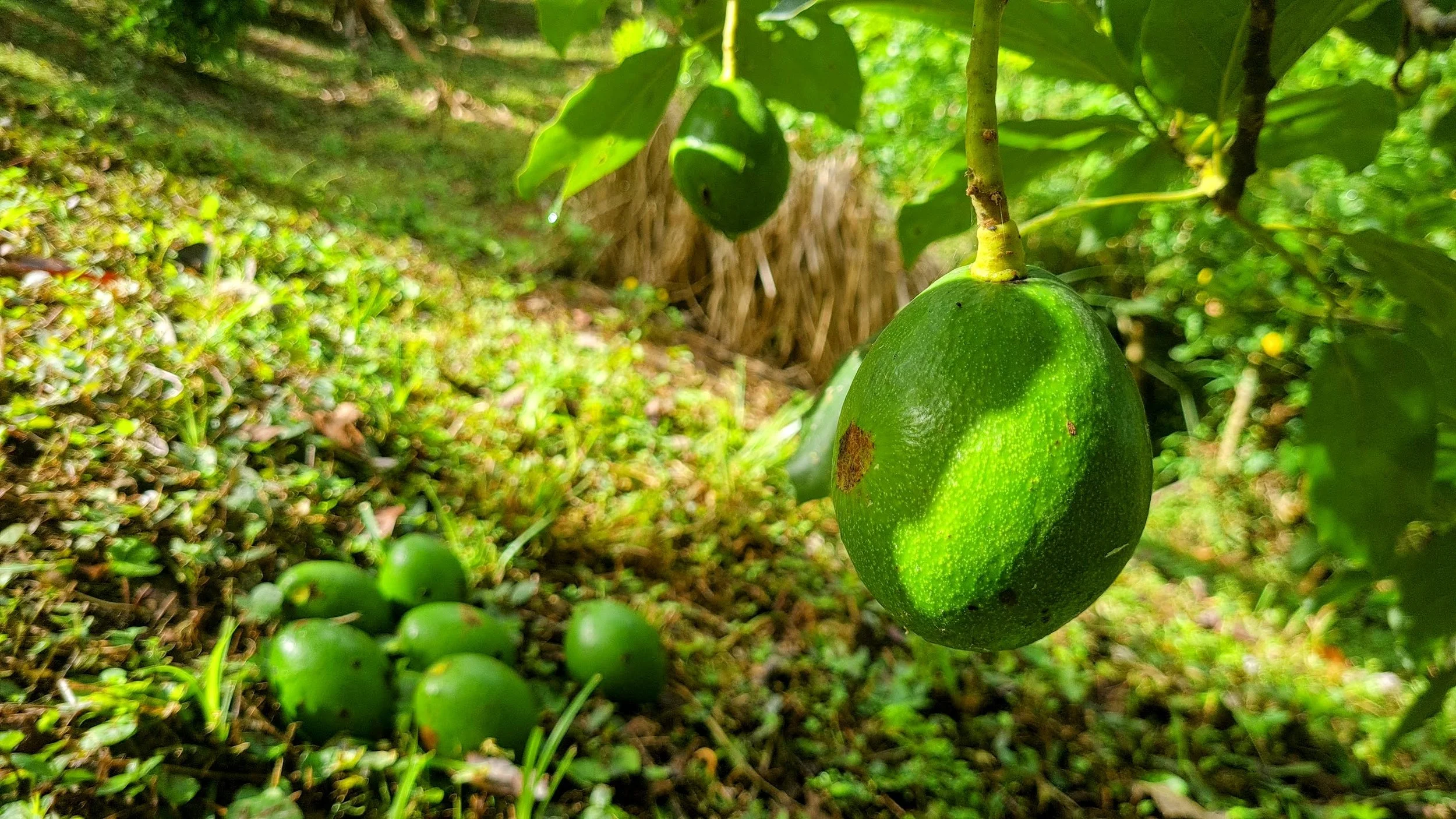
Avocado (Persea americana)
Our main source of healthy fats. We grow several local varieties that fruit at different times, giving us a near year-round harvest. They thrive in well-drained tropical soils and respond beautifully to light pruning.
Breadnut (again, for plant protein)
A standout tree-based protein that complements beans, adlai, and greens.
Fruits for Nutrition & Flavor
Mango, Soursop, Jackfruit, Guava
These tropical classics form the backbone of high-nutrition fruit production.
Jackfruit is excellent for both sweet and savory dishes.
Guava is prolific and perfect for juices and preserves.
Soursop blends beautifully into smoothies and medicinal drinks.
Mango delivers heavy seasonal harvests.
Papaya Fast-growing and highly productive. Each plant yields 30–50 kilos of fruit per year. Green papaya is a versatile vegetable, raw or cooked; ripe papaya becomes smoothies or fresh slices rich in vitamin A and digestive enzymes.
Passion Fruit A vigorous vine that produces fragrant tropical fruit with bright, tangy flavor. It climbs easily on trellises or support trees, and the pulp is perfect for juices, smoothies, and desserts.
Essencials
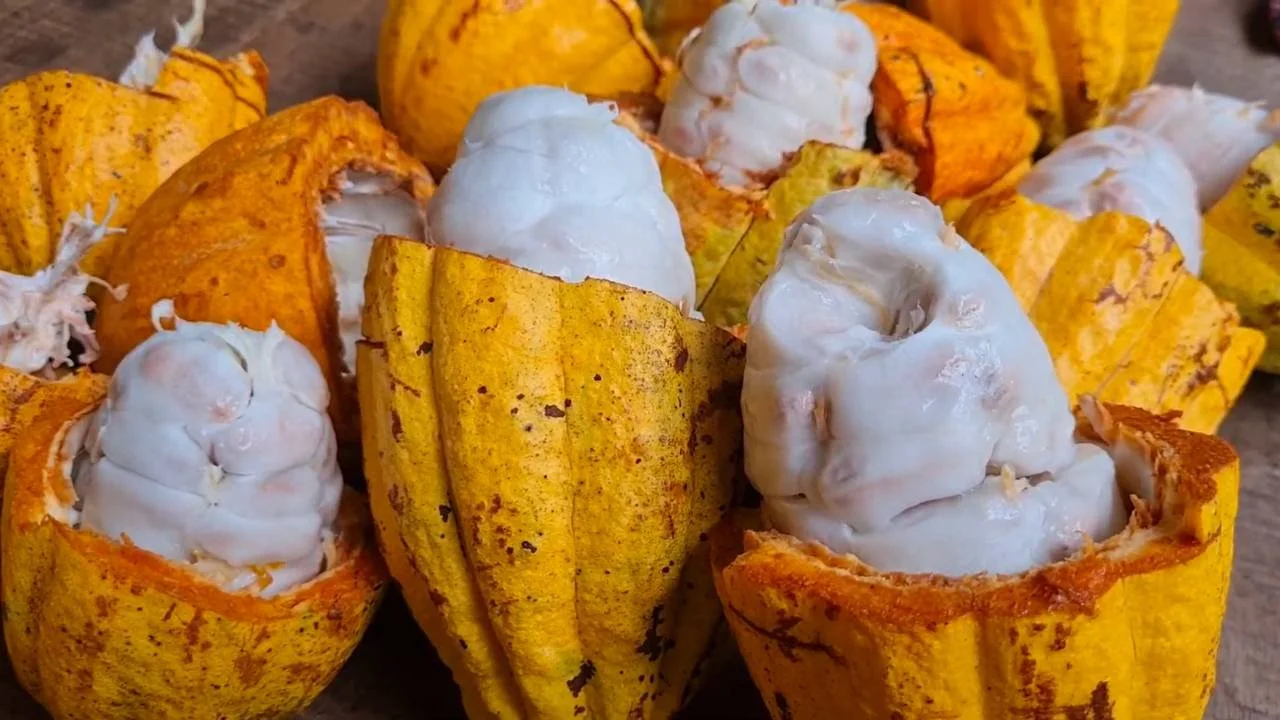
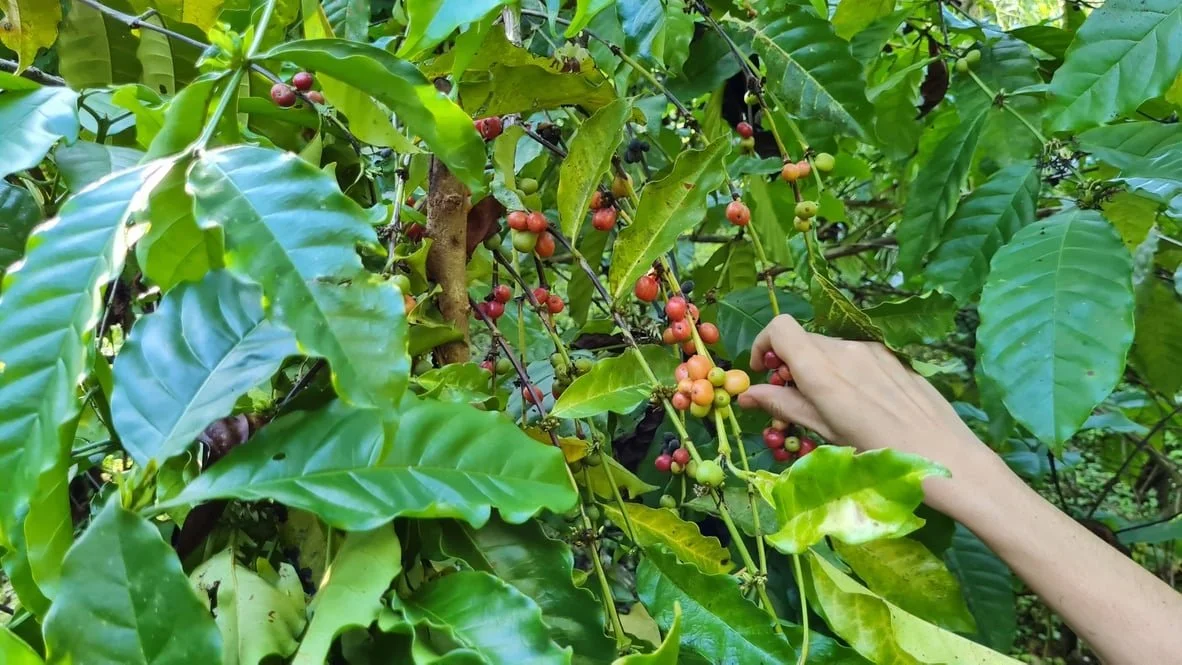
Cacao & Coffee
Our comfort crops. Both grow well in the mid-canopy under partial shade. Just a handful of trees provides all the chocolate and coffee we need.
Snack Layer
These small trees and shrubs provide constant, easy harvests. The most nutritious “grab-and-go” foods of the forest.
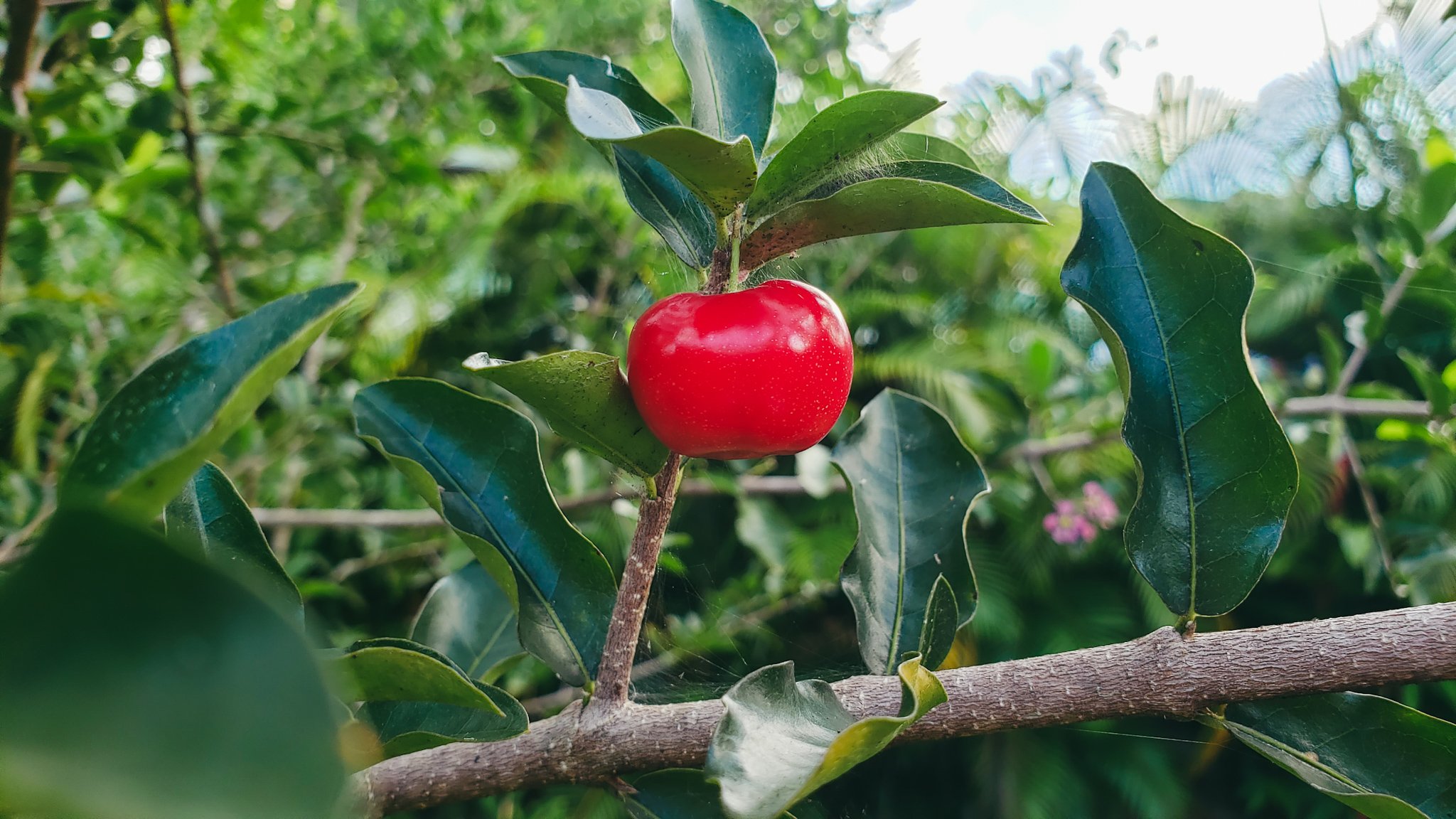
Barbados Cherry (Acerola)
A vitamin-C powerhouse that fruits several times a year.
Lemon-Drop Mangosteen (Garcinia intermedia)
Bright, citrusy fruit that kids love.
Mulberry & Pitanga
Fast-growing bushes that produce reliably and abundantly, perfect for quick, sweet snacks during garden walks.
There is always something ripe within reach. Each species has its own microclimate, spacing, and pruning rhythm. Choosing the right combination for your soil, rainfall, and goals is what makes a food forest thrive and that’s exactly what we teach step by step inside the Tropical Permaculture Online Course.
Support Species: Building Soil & Fertility
Two plants, the “engines of fertility,” quietly power the entire system:
Gliricidia (Quick Stick / Madero Negro / Madre de Cacao):
A fast-growing nitrogen-fixing tree that acts as the fertility engine of the forest. We prune it several times a year, using its soft branches for mulch and compost. Its light-dappled shade protects young trees, and its leaves release nitrogen as they break down. It gives the forest that beautiful, deep green tone of constant fertility.
Tithonia (Mexican Sunflower / Botón de Oro):
A deep-rooted nutrient miner that brings phosphorus, potassium, calcium, and micronutrients up from depth and converts them into rich biomass. When we prune Tithonia, those nutrients become immediately available to our fruit trees. This plant is exectionaly useufull during establishemt to restore fertility and is phased out as the system matures.
We also grow Perennial Peanut (Arachis pintoi) as a living mulch, fixing nitrogen, suppressing weeds, and maintaining constant soil cover.
Together, these support species replace the need for chemical fertilizers and dramatically increase organic matter and resilience in the tropics.
Understory & Complementary Crops
With proper tree spacing, there’s plenty of light between canopies for intercrops like:
Roselle (Hibiscus sabdariffa)
A resilient shrub producing calyces for hibiscus tea. It thrives in sunny edges, adds color and flavor, and is full of antioxidants. Sipping tea or juice throughout the day helps maintain antioxidant levels in our bodies, supporting immune health and radiant skin. A true elixir for eternal youth!
Cassava (Manihot esculenta)
A reliable root crop for carbohydrates. Once established, it yields even under partial shade. Very versatile in the kitchen. We fry, pureé, and make it into flour for baking.
Taro (Colocasia esculenta)
The ultimate backup root. It thrives in the shaded, moist corners where most crops won’t grow. Very versatile in the kitchen. For fries, patties, baked, and as a soup, or smoothie creamer.
Pineapple (Ananas comosus)
In sunny pockets, we plant a small section each year to maintain a steady rotation.
We plant a new pineapple patch each year. It takes about 9+ months to mature, and one small section of 30–40 plants yields 60+ pineapples annually. They love sunlight and make use of spaces between trees.
Even from the beginning, these crops yield a steady harvest as trees mature.
Water, Light & Microclimate Management
We plant on gentle slopes for natural drainage and avoid low-lying areas that flood during tropical downpours.
Mango and avocado thrive in drier, elevated zones, while coconut, papaya, bananas, and passionfruit prefer humidity and do best near greywater outlets or natural moisture sinks.
By planting at the start of the wet season, roots establish before the first dry months arrive. After that, the forest begins to regulate itself; canopy shade cools the soil, mulch locks in moisture, and rain infiltrates deeply through living groundcover.
That’s tropical food forest design in action: a landscape that balances its own water and light. No irrigation system required.
Maintenance & Harvest
After the first year, the food forest begins to balance itself.
We no longer irrigate. Shade, mulch, and living soil take over—maintenance shifts from weeding and fertilizing to observing, pruning, and harvesting.
Work follows the rhythm of the land: light pruning after fruiting, occasional mowing between cycles, and steady harvests throughout the year — breadfruit, coconuts, cacao, bananas, coffee, and more.
The beauty of a well-designed tropical system is that it works with you.
Instead of fighting the climate, you’re participating in its natural cycles.
The result is a landscape that feeds you year-round and gives wildlife space to thrive, all with minimal upkeep. Just a few weekly hours of care that feel more like connection than work.
The Food Forest Timeline
Year 1: Plant trees and support species, and mow often to establish roots.
Year 2: Shape trees, begin pruning for structure.
Year 3–4: Trees fruit, most support species are phased out, weeds decline, workload drops.
Beyond: Minimal work, maximum yield.
In just a few years, our food forest turned into a self-maintaining ecosystem.
Once you’ve built the fertility cycles and microclimate, nature takes over. You harvest, prune, and enjoy!
Before planting, make sure you’ve selected species suited to your climate. See our guide to the best fruit trees for tropical climate.
Example Layout: Our 2,000 m² Homestead Plan
Our homestead is designed as an integrated system where each element supports the others, keeping daily care simple and harvests abundant.
Food Forest
Fruit trees and support species with an open understory for roots and pineapples, designed for long-term fertility.
Vegetable Garden
Located near the house for effortless daily harvests of herbs, greens, and fruiting vegetables.
→ See how we designed our tropical vegetable garden inside this system.
Grain and Protein Patch
Rotational plantings of beans and corn, plus Adlai (Job’s Tears) as a perennial grain for staple calories and plant protein.
Compost and Tool Area
A central hub where all organic waste returns to the soil through composting and biochar.
Chickens and Fish Pond (Optional)
Mobile hens for eggs and fertility, and a small low-input fish pond for occasional protein. Optional, but deeply enjoyed.
The key is designing around the foods your family actually eats, in quantities that cover staples, reduce grocery costs, and still leave room for diversity and pleasure.
To see how this layout performs in real life, including yields, calories, and nutrition, see:
How Much Land to Feed a Family: A Complete Diet on ½ Acre (2,000 m²) in the Tropics
Related Reading
How Much Land to Feed a Family: We Grow a Complete Diet on ½ Acre (2,000 m²) in the Tropics
Tropical Vegetable Garden: How to Grow Abundantly in the Tropics
Design Your Own Tropical Food Forest
To design your own tropical food forest, including layout templates, species charts, and management timelines — explore our Tropical Permaculture Online Course.
Learn with Us
Stay with us in Costa Rica for our On-Site Permaculture Design Certification (72 hours). We teach the complete method of soil, bed building, crop timing, food-forest integration, and a kitchen that turns harvests into meals. Come meet like-minded people from all over the world and enjoy fresh, locally grown produce while learning to design, build, manage, and harvest from our living gardens and food forest.
FAQ — Tropical Food Forest Design
How big should a tropical food forest be?
500 m² can feed a couple comfortably; 2,000 m² supports a full family with year-round variety. Scale depends more on design than on size.
Do you need irrigation in the tropics?
Only for young trees during establishment. Especially, in dry tropical savanna climate types. After roots are set and mulch cycles are functioning, no irrigation is needed; the forest manages its own microclimate. However, for plants that produce year-round, such as bananas and papayas. We recommend that household greywater be designed to irrigate them for year-round production in dry climates.
When do trees start producing?
Bananas and papayas and many others can fruit in the first year. Most long-lived fruit trees begin producing from year three onward.
What support species build fertility fastest?
Gliricidia, Tithonia, and perennial peanut. Together they replace the need for compost or fertilizer.
Can a food forest replace grocery shopping?
Yes, if designed for a complete diet. Our 2,000 m² homestead provides carbohydrates, protein, fats, and fruit for a family year-round.
About the Authors
Ian Macaulay is a tropical permaculture designer and educator specializing in food forests, regenerative homesteads, and tropical agroforestry.
Ana Gaspar A. is a Costa Rican lawyer and sustainability advocate focused on bioregional food sovereignty and ecological law.
Together they founded Finca Tierra Education Center, where they live off-grid, teach internationally certified Permaculture Design Courses, and develop replicable models for self-sufficient living in the tropics.