
Tropical Vegetables: How to Grow a Productive Tropical Vegetable Garden
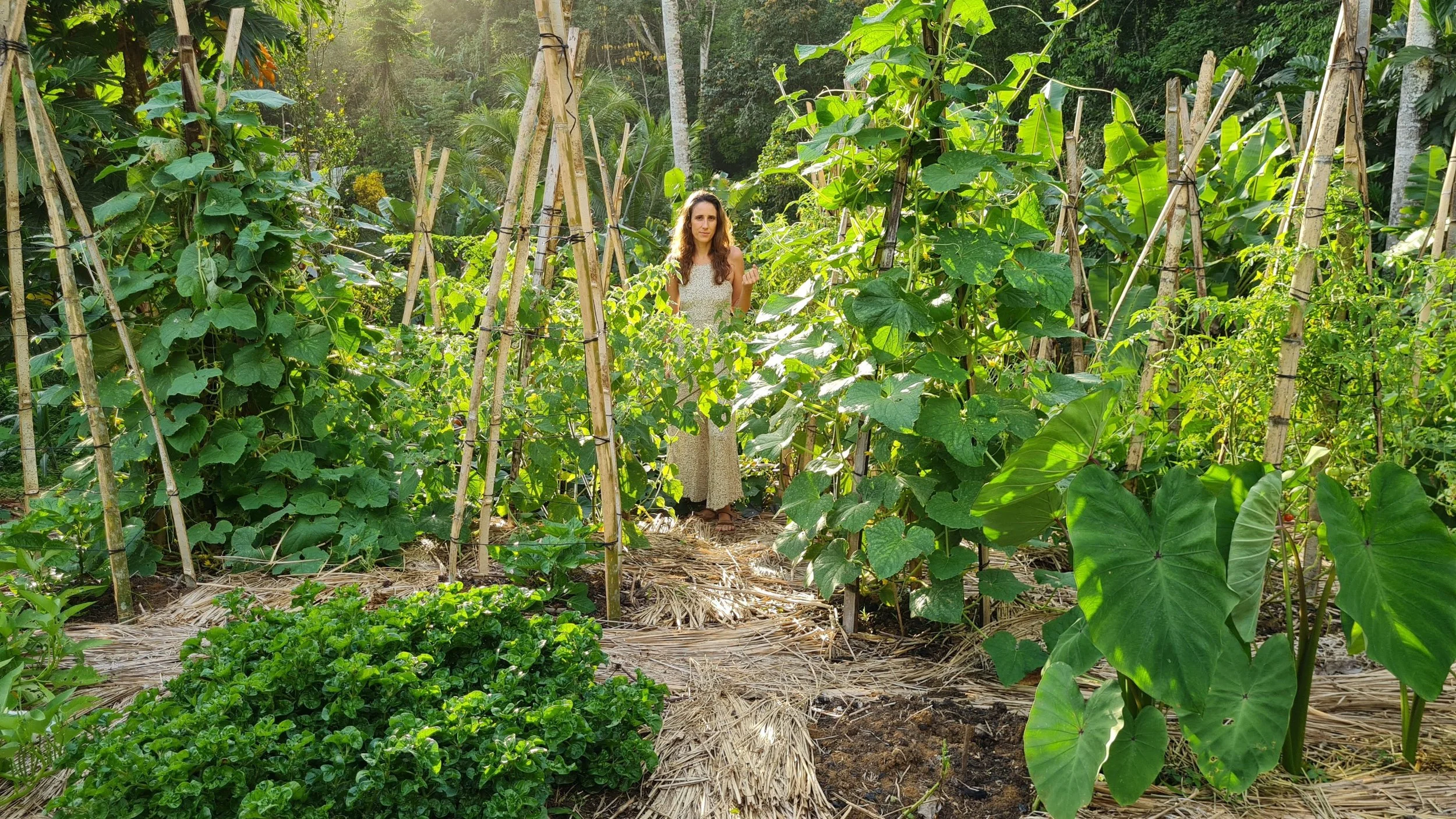
Growing a productive tropical vegetable garden is absolutely possible. You just need to garden with the climate.
After 15+ years of experimenting at Finca Tierra on Costa Rica’s Caribbean coast, we’ve learned which vegetables thrive in tropical climates, how to improve clay soil in the tropics, and how to design compact gardens that produce fresh food every day.
This guide distills the exact methods we teach in our courses so you can grow abundantly in humid or dry tropical regions. Our vegetable garden is part of a complete tropical food system, alongside food forests, roots, grains, and protein crops.
Tropical Vegetables That Thrive in Heat and Humidity
Many vegetables can grow in tropical climates, but the most reliable species are those adapted to constant warmth, high humidity, and rapid biological cycles.
The following vegetables consistently perform well in tropical gardens:
Perennial tropical greens
chaya
katuk
Brazilian “sisso” spinach
kangkong (water spinach)
cranberry hibiscus
moringa
bunching onions
Fruiting vegetables that tolerate tropical climates
cherry tomatoes
cucumbers
sweet peppers
eggplants
yardlong beans
sweet corn
These crops thrive when planted in well-drained soil with constant mulch and good airflow.
Below we explain how we design tropical vegetable gardens so these crops produce year-round.
Why a Tropical Vegetable Garden Is Different
Most gardening advice comes from temperate climates. But in the tropics:
Sunlight is more intense
Nights stay warm
Humidity speeds up everything: growth, decay, fungi, and insects.
This creates a very different biological rhythm.
Common mistakes new tropical gardeners make:
Forcing cool-season crops year-round, they bolt or rot.
Flat beds without drainage → roots suffocate in downpours.
Crowding plants → diseases thrive in stagnant air.
Ignoring tropical perennials that love the heat.
The foundation of a successful tropical vegetable garden is choosing plants that love heat, humidity, and rainfall cycles, then layering in temperate crops when your microclimate allows.
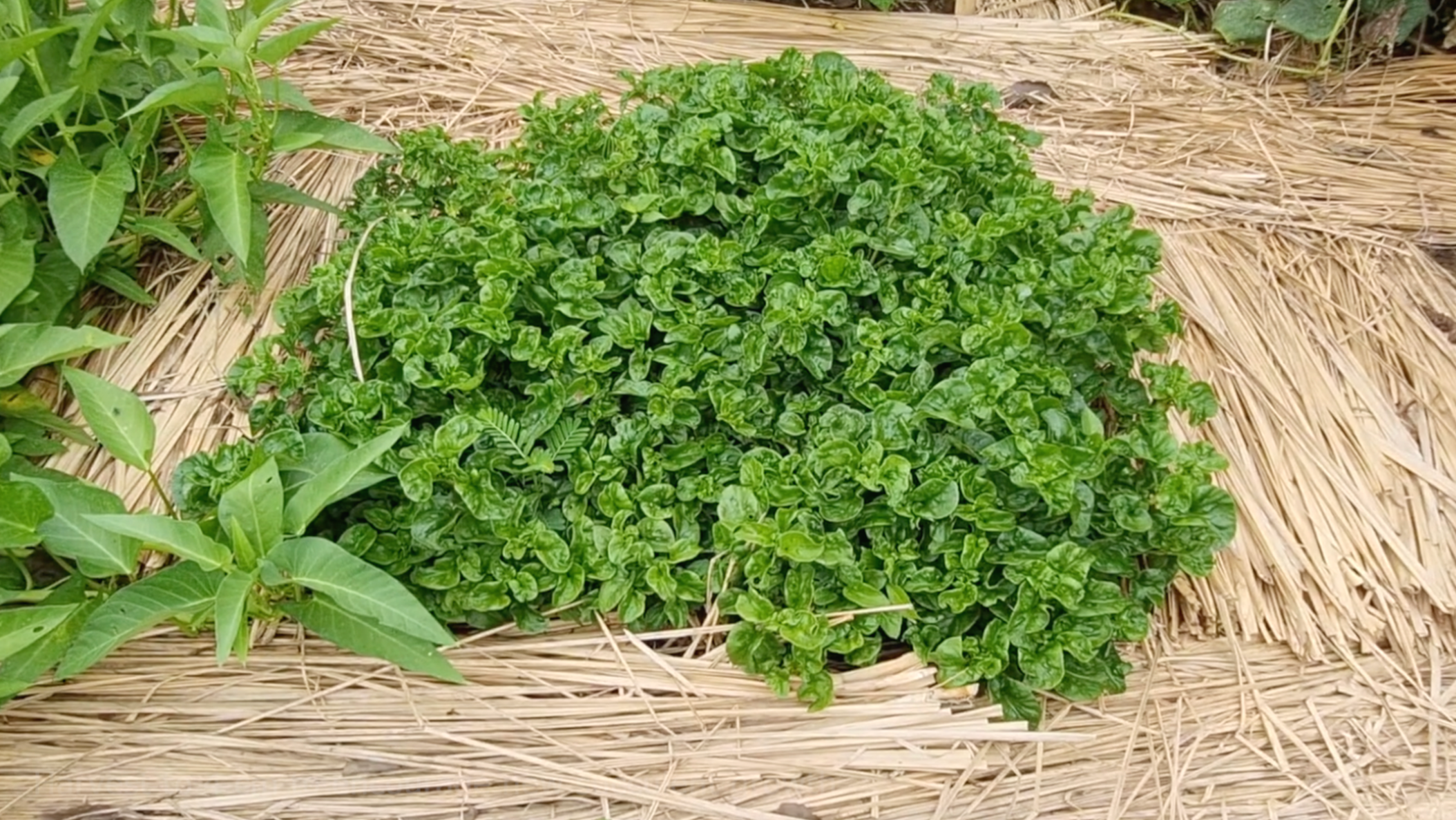
Brazilian “Sisso” Spinach, a hardy tropical perennial green that’s always available
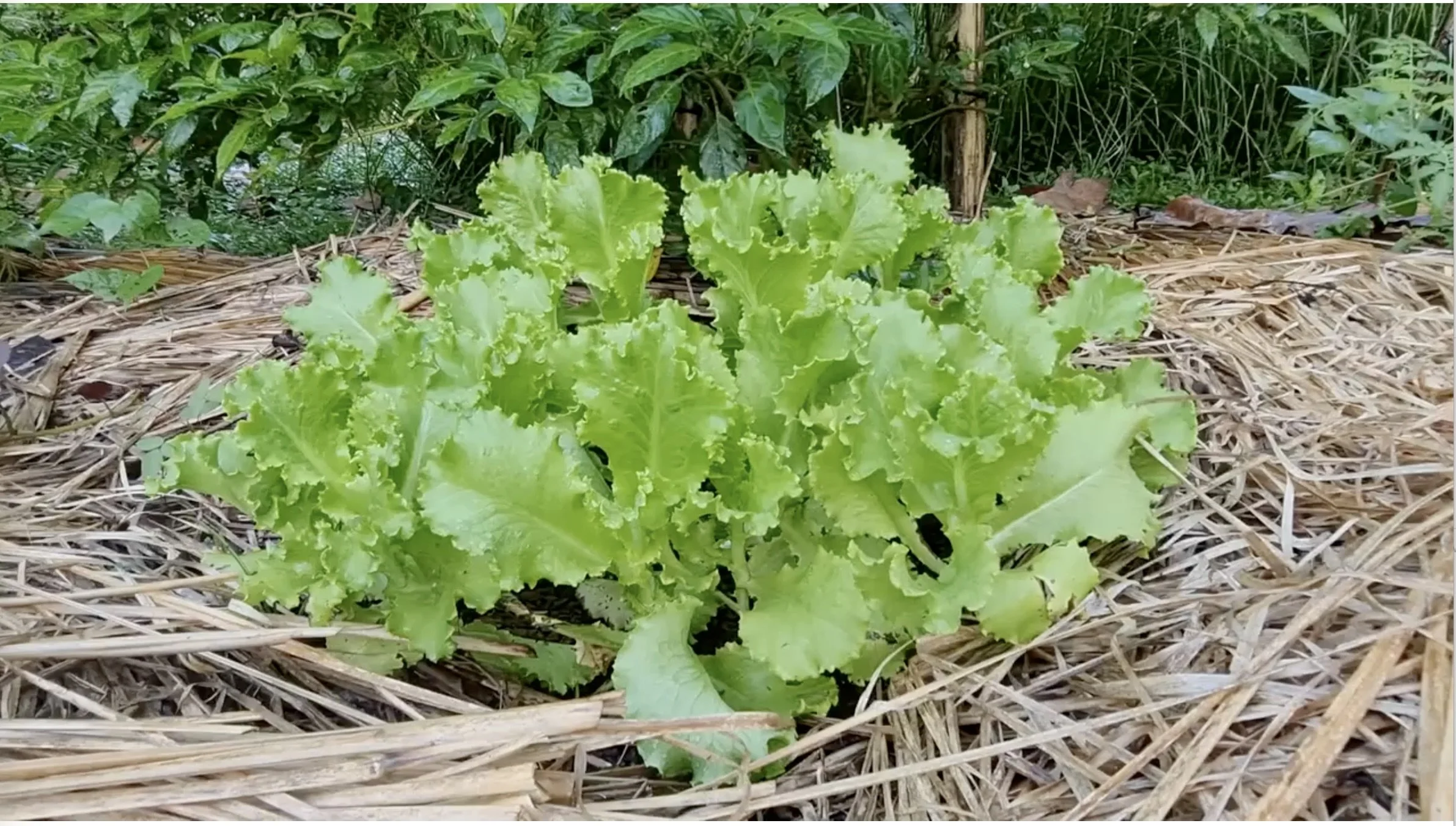
Loose leaf lettuce does well in shade of large trellised plants, but need to be replanted often
Our Mini-Forest Vegetable Garden (Small Space, Daily Harvests)
We design our vegetable garden like a mini tropical forest, with:
Layered plants
Constant mulch
Living soil
The most fertile beds grow greens, herbs, and fruiting vegetables we harvest daily:
Cherry tomatoes
Peppers & sweet habaneros
Cucumbers
Eggplants
Bunching onions
Tropical perennial greens
Herbs
Sweet potatoes
Around the garden, the tropical food forest grows longer-cycle crops:
Papaya
Passion fruit
Taro
Cassava
This vegetable garden is designed to work as part of a complete tropical homestead. To see how vegetables, staples, protein, and fats come together to feed a family year-round on 2,000 m², see our real-world case study here.
From Pure Clay to Loose, Black Soil (Tropical Soil Improvement Guide)
Our native soil is pure clay. Sticky in the rain, rock-hard in the sun. Perfect for pottery, terrible for vegetables.
But the tropical forest shows the solution: fertility lives in the top organic layer, fed constantly by falling leaves.
Our method for transforming tropical clay soil:
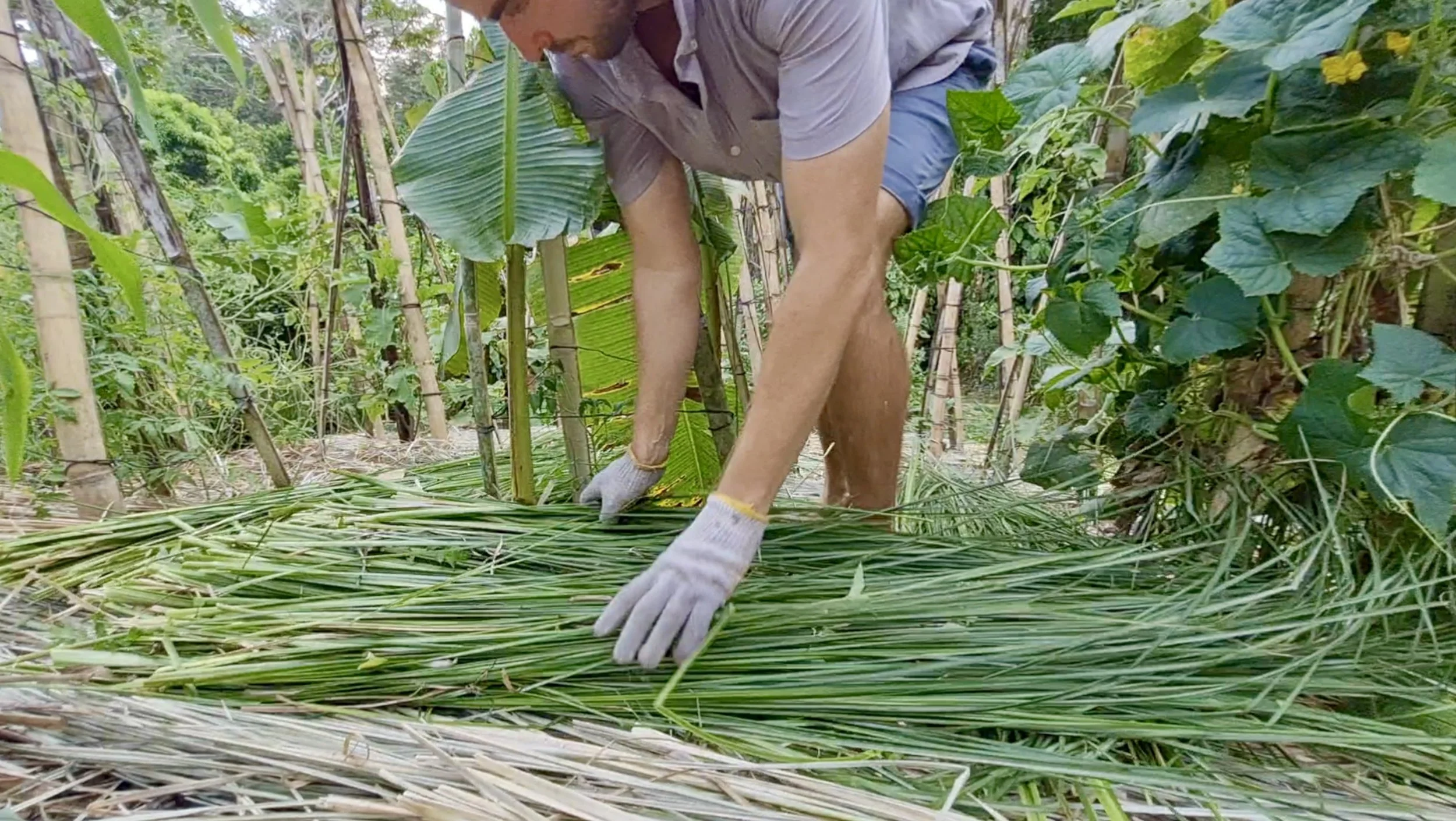
Continuous mulch - thin layers added frequently
Biochar - made from clean charcoal and composted
Blending compost into the top 10 cm of clay, mimicking forest soil building
Crowning beds for drainage
After a few years, the soil becomes loose, black, crumbly, and alive.
Mulching in the Tropics = Fertility + Protection + Resilience
In tropical climates, organic matter breaks down extremely fast.
So we grow mulch near the garden:
Vetiver
Tithonia (Mexican sunflower)
Gliricidia
and recycle all food waste into compost and black soldier fly fertilizer.
Mulch in the tropics:
Feeds soil life like a forest floor
Prevents erosion during heavy rains
Regulates moisture in droughts
Protects microbes from extreme sun
We’ve tested dozens of materials. The secret is continuous rhythm, not large inputs.
Timing in Humid and Dry Tropical Climates
The tropics have wet–dry pulses, not four seasons. On the Caribbean coast, we have two short dry seasons (~2 months each); elsewhere on the Pacific side, you may have one long dry season.
Year-round growth is possible with mulch, partial midday shade from shade cloth or living trellises, and airflow, plus irrigation during long, dry seasons.
Focus annual planting as the rains ease, and harvest during the drier period (a classic “plant wet, harvest dry” approach).
Design for easy watering: a simple sprinkler, used 2–3 times a week during peak drought, is often enough when beds are mulched.
Tropical gardening rewards observation over strict calendars.
Drainage: Gentle Slope or Modest Raised Beds
Tropical downpours can drown roots overnight.
If your site forms puddles:
Plant on a gentle slope, or
Build raised beds 15–20 cm high
Crown beds so excess water escapes easily
You don’t need tall boxes, just enough elevation for survival in heavy rains.
Sunlight: The Tropical Sweet Spot
In the tropics:
6 hours = full sun
8–9+ hours can stress plants
Guidelines:
Fruiting vegetables (like tomatoes and peppers) → full sun
Leafy greens → partial shade
Overexposed gardens → use living trellises or shade cloth
Choose the Right Plants
1) Perennial & Effortless Tropical Greens
We’ve tested over 60 vegetable species at Finca Tierra. These are the ones that deliver consistent yields, nutrition, and resilience year-round.
Chaya / Tree Spinach (Cnidoscolus aconitifolius): Massive yield and one of the most nutritious plants on the planet; boil ~20 min before eating. An old staple in Costa Rica and still popular in southern Mexico and Central America.
Katuk / Sweet Leaf (Sauropus androgynus): Delicious fresh leaves and cooked shoots; enjoy in moderation (avoid raw juicing).
Brazilian “Sisso” Spinach (Alternanthera Sisso): Crunchy, low-maintenance green that adds texture to salads and cooks beautifully.
Kangkong / Water Spinach (Ipomoea aquatica): A tropical favorite across Asia; grows fast and tastes incredible stir-fried with garlic or steamed with fish sauce.
Cranberry Hibiscus (Hibiscus acetosella): Tangy red leaves for salads.
Moringa (Moringa oleifera): Grows fast, drought-tolerant, and protein and nutrient-packed. Fresh in salads or dried.
Bunching onions: Endless chives and bulbs, no reseeding needed.
They evolved to thrive in heat and humidity, and can be harvested endlessly, yet they bounce back quickly.
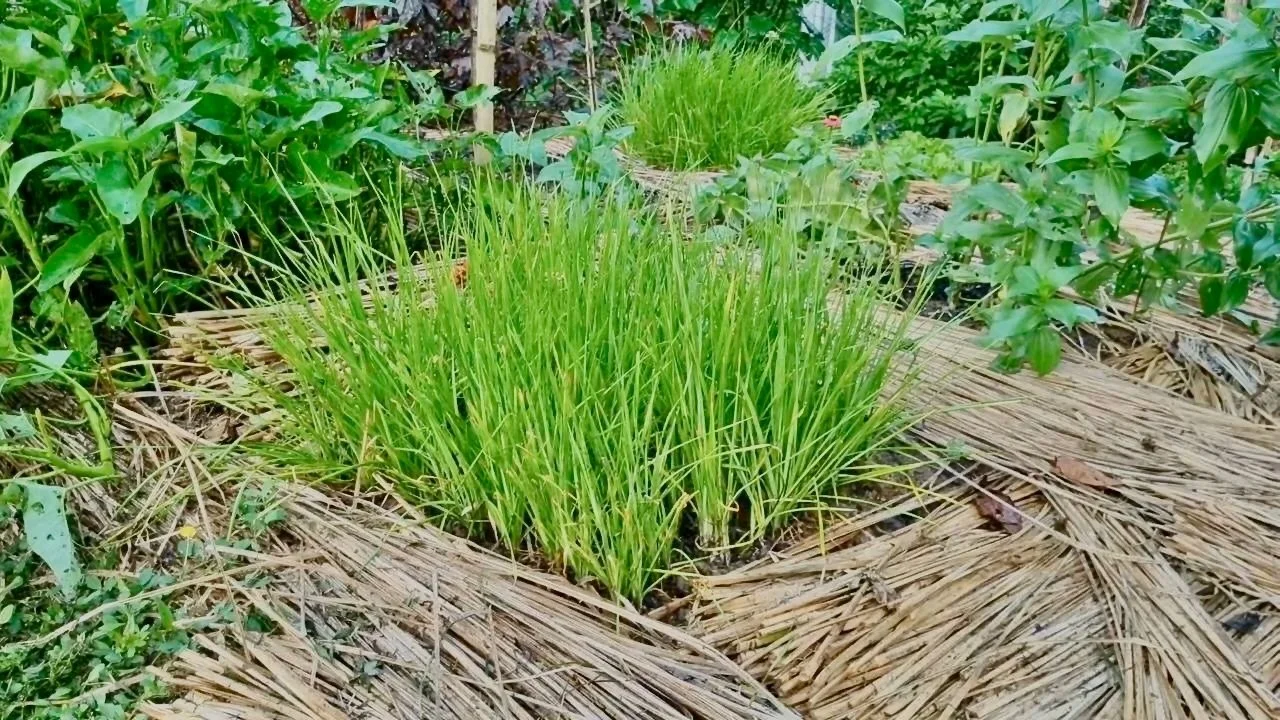
Bunching onions also grow as a perennial
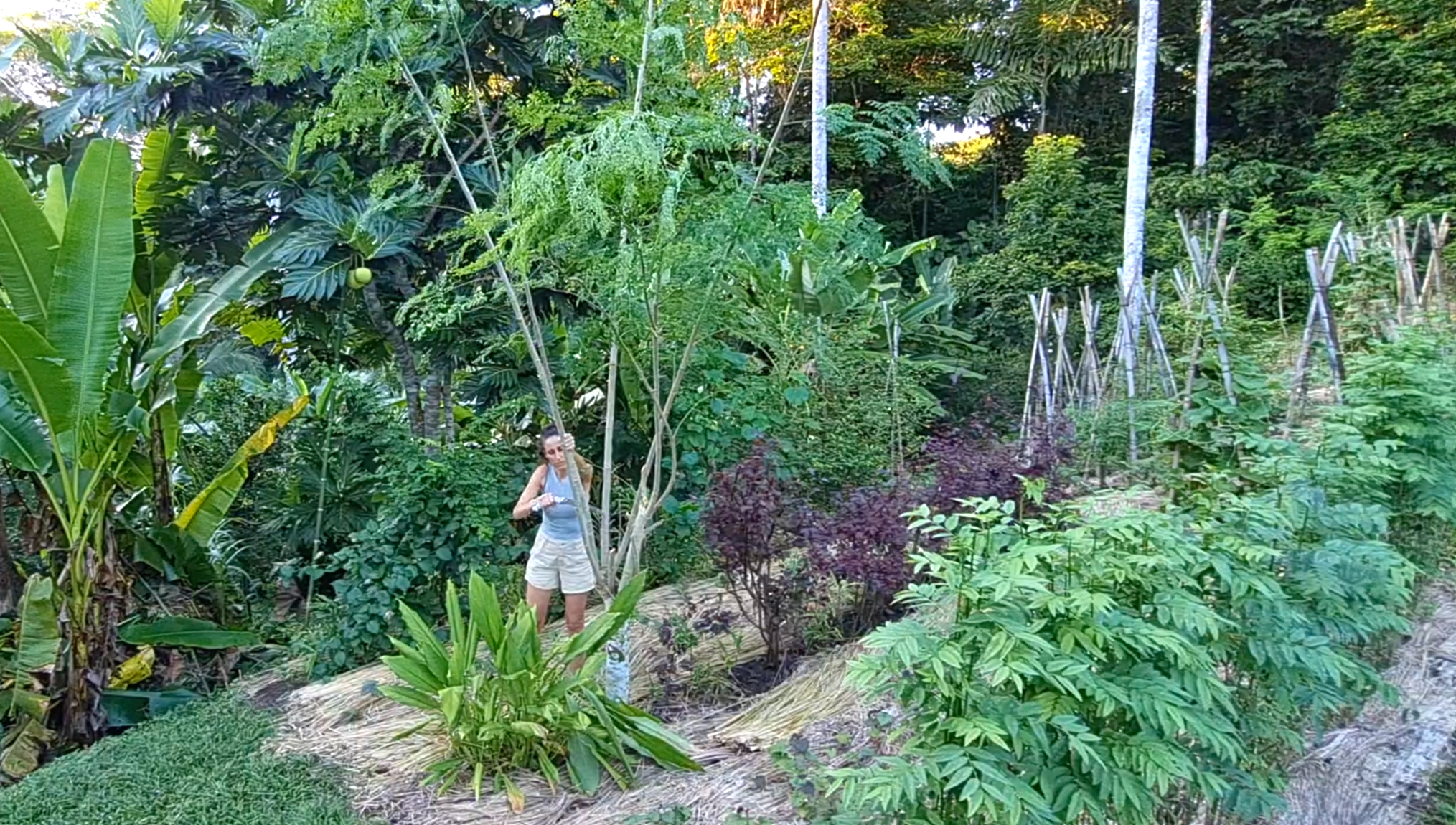
Moringa, Katuk, cranberry hibiscus, chaya and other perennials in the garden
Other Notable Tropical Greens
Other species like Okinawa spinach, Longevity spinach, Malabar spinach, and amaranth also thrive in the tropics. We grow them mainly to preserve the species, but any could become your favorite depending on taste and texture.
2) Fruiting Vegetables (Culinary Stars)
Fruiting vegetables take more care, steady moisture, high fertility, and sunlight, but they’re worth every bit of effort.
We grow:
Cherry tomatoes: We grow resilient, small-fruited varieties that handle humidity better than larger ones. They thrive in full sun and with good airflow, so we keep them trellised.
Cucumbers: Theyare also trellised to minimize disease pressure. Regular picking keeps them producing.
Sweet peppers: Sweet habanero types are heavy producers; they are often perennial if kept pruned and well-fed.
Eggplant: Heavy-bearing and often perennial, producing for over a year.
Yardlong beans: They handle high humidity, fix nitrogen, and yield prolifically even on poor soil.
Sweet corn: Planted continuously in small patches in the garden for a year-long supply.
A small nursery ensures we always have young plants coming on.
Thick mulch reduces watering needs by up to 70%, and trellises keep air moving to avoid fungal issues.
In the course, we delve deeper into succession planting and crop spacing. How to overlap short and long-cycle vegetables to achieve constant harvests with minimal maintenance.
Other Notable Tropical Vegetables
These crops grow beautifully in tropical conditions, though we don’t rely on them much. There’s simply so much else coming out of the garden.
Winged Bean (Psophocarpus tetragonolobus): Extremely nutritious; thrives in humidity and produces edible pods, leaves, and tubers.
Okra (Abelmoschus esculentus): Among the most heat-tolerant vegetables; harvest young for tender pods.
The Core Principles of Abundant Tropical Gardening
If you master these four things, you will grow food year-round:
Mulch rhythm
Good drainage
Timing with your region’s wet–dry cycle
Choosing tropical species first
Related Reading
How Much Land to Feed a Family: We Grow a Complete Diet on ½ Acre (2,000 m²) in the Tropics
Tropical Food Forest Design: Best Trees & Support Species for Abundance
How to Design a Self-Sufficient Tropical Permaculture Homestead
Grow Abundantly in the Tropics
Our Tropical Permaculture Online Course teaches tropical vegetable garden design, crop selection, soil fertility systems, example garden templates, seasonal planners, and video lessons.
Learn With Us
Prefer to learn in person?
Join us in Costa Rica for our Permaculture Design Certification (PDC) - designed for all climates.
Spend two immersive weeks learning:
Tropical vegetable gardening
Soil regeneration
Natural building
Food forest design
Garden bed preparation
All while enjoying daily catered farm-to-table meals in the rainforest.
Common Questions About Tropical Vegetable Gardening
What are the best tropical vegetables to grow?
Perennial greens like chaya, katuk, Brazilian “sisso” spinach, kangkong, cranberry hibiscus, and moringa thrive in heat and humidity. Fruiting vegetables such as cucumbers, tomatoes, eggplants, and peppers also perform well with proper fertility, airflow, and consistent organic matter in the soil.
Can you grow lettuce or brassicas in tropical climates?
Yes, but timing matters. Lettuce, kale, cabbage, and other brassicas grow best during cooler or drier periods and often benefit from partial shade. Many tropical gardeners replace them with heat-tolerant greens such as katuk, Brazilian spinach, or chaya.
How do you improve clay soil in tropical climates?
Clay soil improves quickly with organic matter. Mix compost and biochar into the top 10 cm of soil and maintain thick mulch on the surface. Because organic matter decomposes rapidly in tropical climates, adding small layers frequently helps maintain long-term soil fertility and structure.
How much sun does a tropical vegetable garden need?
Most tropical vegetables need around six hours of direct sunlight each day. Less sunlight can reduce fruit production, while intense full sun for more than eight hours may cause stress. Living trellises, shade cloth, or nearby trees can help moderate extreme heat.
When should you plant vegetables in the tropics?
Planting often works best as the rainy season begins to ease, allowing crops to establish before the driest months. With mulch, irrigation, and good soil management, many tropical vegetables can be grown year-round.
What vegetables grow year-round in the tropics?
Perennial greens such as chaya, katuk, moringa, Brazilian spinach, and kangkong can produce harvests throughout the year in warm tropical climates. Seasonal crops like cucumbers, tomatoes, eggplants, and peppers are often rotated between rainy and dry periods.
About the Authors
Ian Macaulay is a tropical permaculture designer and educator with more than fifteen years of experience designing food forests, regenerative homesteads, and climate-specific food systems in the humid tropics.
Ana Gaspar A. is a Costa Rican human rights lawyer and sustainability advocate working at the intersection of food sovereignty, bioregional organization, and eco-legality.
Together, they founded Finca Tierra Education Center, where they live off-grid in Costa Rica’s Caribbean lowlands, teach Permaculture Design Courses, and develop replicable models for self-sufficient living in tropical climates.