
How Much Does It Cost to Build a Self-Sufficient Homestead in the Tropics?
Self-sufficiency is often perceived as expensive. In reality, most tropical homesteads fail not because they cost too much, but because money is spent in the wrong order.
A tropical food system is primarily a biological investment, not a technological one.
When spending follows biology, long-term costs fall sharply.
Most Costs Are Upfront, Not Ongoing
The majority of expenses occur during setup. Once systems are established, recurring costs drop dramatically.
Our design prioritizes:
minimal purchased inputs
long replacement cycles
low ongoing expenses
The real cost question is not what something costs once, but what it requires year after year to keep functioning.
Core Food Production Infrastructure (Real Costs)
Our food production infrastructure includes:
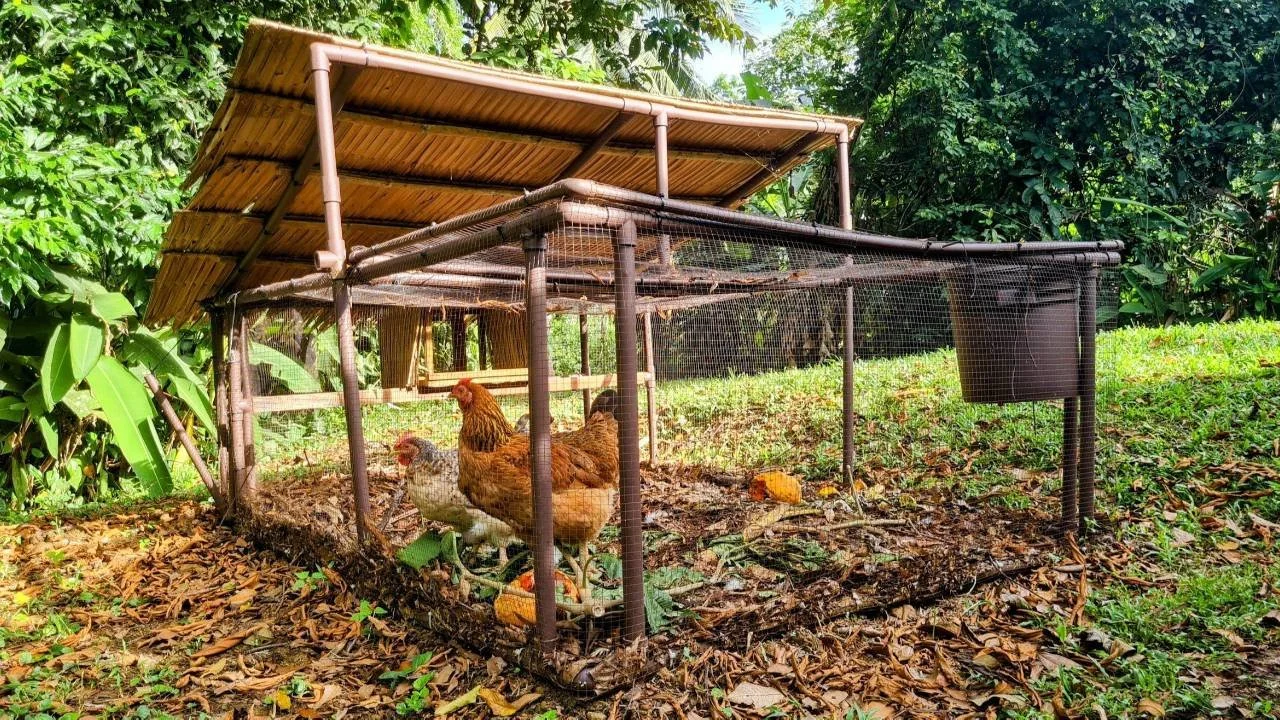
Chicken coop: ~$150
Solar dehydrator: ~$90
Compost systems: ~$300
Compost containers: $75–200
Nursery setup: ~$70
Hand tools: ~$450
Power tools: ~$1,000
Bee hives (optional): ~$200
Trees: ~$540
Seeds: ~$100
Total core food infrastructure: ~$2,975
These are long-lived investments. Many last decades when maintained and used as intended.
House and System Infrastructure (Optional, Context-Dependent)
Some infrastructure improves comfort, resilience, and long-term cost stability, but is not required for food production itself.
Examples include:
Solar power system (2 kW): ~$4,500
Water harvesting (10,000 L): ~$2,000
Irrigation or swimming pond: ~$2,000
Total optional infrastructure: ~$8,500
Whether these systems make sense depends entirely on context.
For off-grid sites without access to electricity, a solar system is often a necessary early investment. In locations with reliable grid access, however, solar may take many years to pay for itself and is not always a financial priority.
In the humid tropics, water harvesting is often one of the fastest-paying upgrades. Capturing rainwater improves water security, reduces pumping and energy costs, and buffers against dry periods, making it a practical resilience investment rather than a luxury.
Irrigation and swimming ponds are also optional, but they are relatively low-cost ways to dramatically increase system resilience. Beyond irrigation, ponds support microclimates, emergency water storage, and biological productivity, while also serving multiple household functions.
For this reason, many tropical homesteads begin without these systems and add them gradually, once food production is stable and site-specific needs are clear.
Context Matters: Location, Materials, and Design
Costs vary widely by country, access to local materials, labor choices, and climate.
These numbers reflect our experience in the humid tropics, using local resources and simple construction methods rather than imported or highly engineered systems.
This cost structure works best when land size and layout are appropriate, which we explain in our guide to how much land it takes to feed a family in the tropics.
What This Cost Reflects (and What It Does Not)
These costs reflect an intentionally low-input, lean, and effective tropical food system.
It is always possible to spend more. Large machinery, imported technologies, permanent hired labor, and highly mechanized systems can quickly multiply costs.
That is not the goal here.
The purpose of this system is to reduce ongoing expenses, not create them. It is designed to save time, not consume more of it. Food production should generate value over time, not require continuous financial or labor inputs to function.
A system that depends on constant spending or constant work is not self-sufficient. It is simply expensive.
Why Low-Input Systems Pay Off Quickly
Biological systems compound.
For example:
Planting 36 pineapples takes roughly 2 hours per year
That planting yields fruit worth approximately $400 or more annually
The same plants continue producing for years
Time and money invested once continue returning value without ongoing purchases.
The Most Expensive Mistakes People Make
Costs rise sharply when people:
buy technology before planting food
import fertility instead of growing it
scale too quickly
prioritize aesthetics over function
The most affordable homesteads are usually the best designed, not the most complex.
The Real Cost Question
The real question is not:
“How much does this cost?”
It is:
“How quickly does this reduce dependence on external systems?”
Food security, resilience, and independence compound over time, financially and otherwise.
Cost Questions People Always Ask
-
No. This article covers the cost of building a low-input tropical food system and the basic infrastructure that supports food production. Land and housing vary too widely to give a single meaningful number. -
No. These figures assume owner-built systems and normal household maintenance. Hiring labor increases costs quickly, but the goal here is to reduce ongoing labor, not create new payroll. -
Not generally. Those are site-specific. This article focuses on the repeatable core of food production rather than property development costs. -
No. The system is designed to minimize them. Fertility is generated on-site through biomass, mulch, compost, and perennial root systems. Systems that depend on constant imported inputs are not low-input.
-
Eggs can be low-input when birds are integrated into the landscape and fed primarily with on-site resources and scraps. Chickens become expensive when they rely heavily on purchased feed. In our system, eggs are complementary, not the primary protein strategy. -
Those risks exist in the tropics. The cost strategy here is resilience through diversity and redundancy rather than expensive interventions. No system is risk-free, but design reduces financial exposure.
-
Often, yes. Costs drop with salvaged materials, local wood, shared tools, and simple construction. Costs rise with imported materials, aesthetic-driven builds, and overengineering. -
Spend in the order that reduces dependence fastest: perennial food plants and fertility systems first, then storage and processing, then comfort upgrades. Biology before technology.
-
They are conservative for systems built with local materials and simple construction. Costs can be lower or higher depending on individual choices, but the underlying principle remains the same.
About the Authors
Ian Macaulay is a tropical permaculture designer and educator specializing in food forests, regenerative homesteads, and tropical agroforestry.
Ana Gaspar A. is a Costa Rican lawyer and sustainability advocate focused on indigenous cosmovision, bioregional organization, food sovereignty, and ecological law.
Together, they founded Finca Tierra Education Center, where they live off-grid, teach internationally certified Permaculture Design Courses, and develop replicable models for self-sufficient living in the tropics.
📧 fincatierra@gmail.com