
Backyard Tilapia Ponds in the Tropics: How Much Protein Can a Small Pond Produce?
Protein is often treated as the most difficult nutrient to produce reliably in the humid tropics.
People assume it requires livestock, purchased feed, or high-maintenance systems.
Our experience has been simpler.
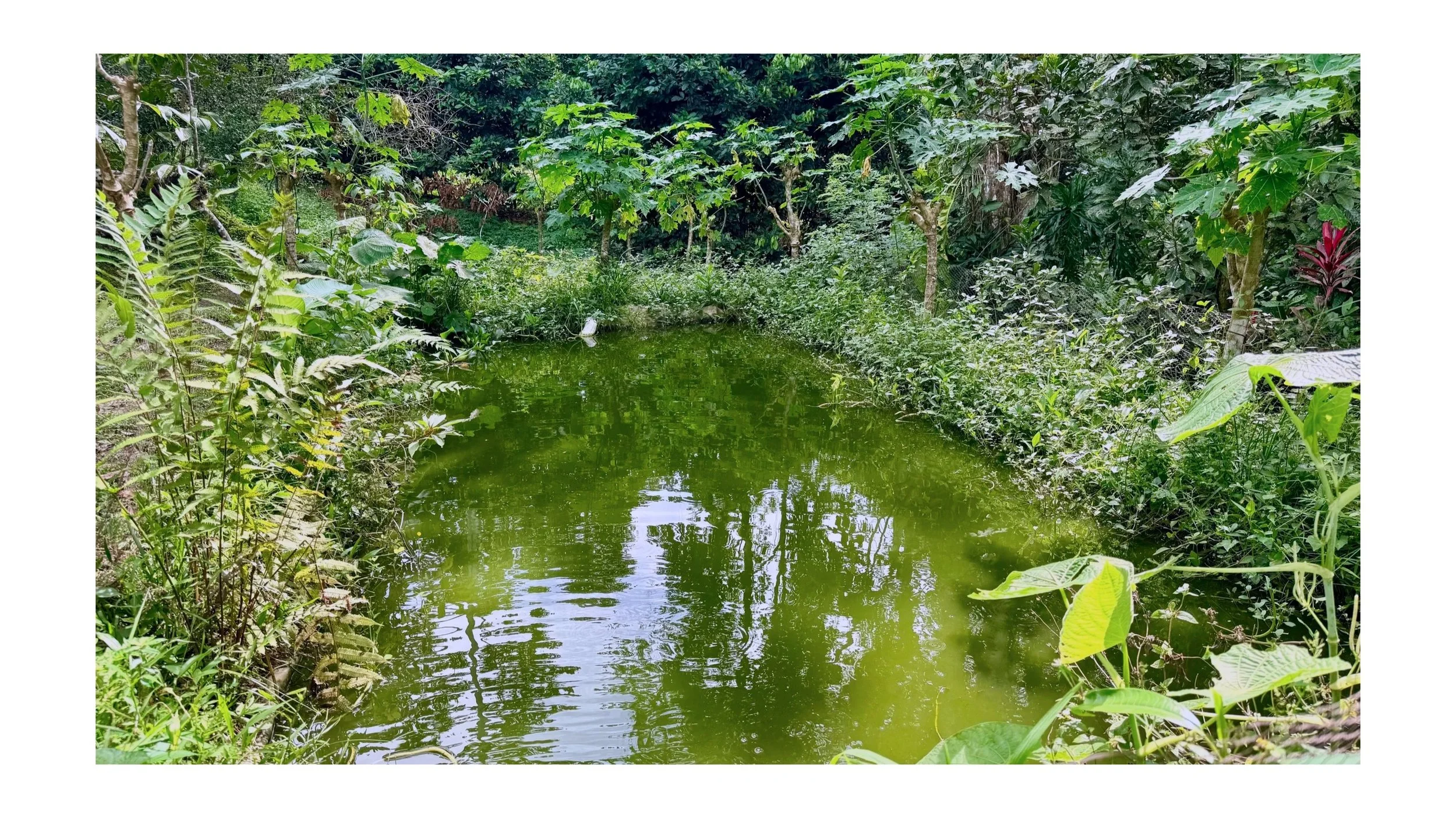
On our homestead in Costa Rica, we operate one small tilapia pond of approximately 20 square meters.
That single pond provides one to two fish meals per week for a couple eating normal portions.
What One 20 m² Pond Actually Produces
From one pond we consistently get:
• One to two plate-sized fish meals per week
• Fish averaging around 350 grams each
• Approximately 17–25 grams of protein per day on average across the year
That does not carry the entire diet.
But it reduces dependence on purchased meat or complicated livestock systems.
The land footprint is small.
Daily labor is minimal.
Harvest is steady rather than seasonal.
Why We Use Tilapia
We use tilapia for practical reasons.
• They grow quickly
• They tolerate heat well
• They handle variable water conditions better than many other edible fish
• And they feed lower on the food chain than most carnivorous species
Unlike predatory fish, tilapia are largely herbivorous and can thrive in ponds supported by algae, plant inputs, and on-site organic materials.
We encourage natural “green water” conditions, where algae and microorganisms form the base of the pond’s food web. This is supplemented with high-protein tropical leaves and other on-site organic inputs.
Because of that, our ponds are not dependent on commercial grain feed.
That makes them easier to integrate into a small tropical homestead without ongoing purchased inputs.
They also taste good, grow to plate size relatively fast, and are simple to harvest whole.
For warm tropical regions, they are among the easiest fish to grow consistently at home.
If You Wanted to Increase Protein Intake
If someone wanted fish to become the primary protein source, scaling is straightforward.
Instead of building one large pond, we would build multiple small ones.
A structure of four to six ponds, each around 20 m², would likely make fish the dominant protein source for a couple.
This approach works because it is modular:
• Each pond produces independently
• If one underperforms, others continue
• Harvest remains distributed across time
• Risk is spread
Scaling meat animals requires more feed, more daily management, and more infrastructure.
Scaling ponds mainly requires additional water surface.
Where Chickens Fit in Our System
We do keep chickens.
They work well for:
• Recycling kitchen scraps
• Converting excess bananas and plantains into eggs
• Adding diversity to the diet
We currently maintain three birds comfortably without purchased feed.
If we had more surplus fruit and greens, we could increase that number modestly.
However, raising chickens primarily for meat would require:
• More daily management
• More feed
• More infrastructure
• Greater exposure to predators and heat stress
For us, chickens are a complementary layer.
Fish are easier to scale if protein demand increases.
Why Tilapia Scale Smoothly in the Humid Tropics
Small backyard tilapia ponds work well in warm, humid climates because they are:
• Heat tolerant
• Low in daily labor
• Flexible in feed sources
• Compact in land use
They integrate naturally into perennial tropical systems surrounded by staple trees, greens, and fat-producing crops.
Unlike many livestock systems, scaling protein from fish mainly requires additional water surface, not dramatically increased daily management.
Land Footprint for a Fish-Centered Protein Base
For a couple:
One pond: ~20 m²
Four to six ponds: 80–120 m²
This provides a stable protein foundation.
It does not replace vegetables, staples, or fats.
It complements them.
See how we grow a complete tropical diet on 2,000 m², including fish, staples, greens, and fats.
For a broader look at protein strategies that actually work in humid tropical systems, see our full guide to protein in the humid tropics.
Where the Technical Details Matter
While the concept is simple, consistent production depends on:
• Stocking approach
• Harvest timing
• Pond fertility management
• Breeding control
• Integration with the surrounding food system
Building a pond is straightforward. Keeping it productive year after year is where design matters.
FAQ
-
In our system, tilapia are fed primarily through on-site inputs: pond fertility, kitchen scraps, plant trimmings, and occasional supplemental feed when needed. The system is designed so that fish are supported by the surrounding landscape rather than dependent on imported inputs.
-
Tilapia are one of the most heat-tolerant and resilient freshwater fish available. When stocked at appropriate densities and harvested continuously, small ponds avoid the waste, disease pressure, and ecological issues associated with industrial aquaculture.
-
You can easily meet basic protein requirements from plant-based sources. In this article, however, we are discussing high-protein diets and the easiest, lowest-work ways to produce them in the humid tropics.
-
Daily labor is minimal. Most management happens at stocking and harvest. Compared to animals that require daily feeding, cleaning, and protection, small tilapia ponds are low-intervention once established.
-
Regulations vary by country and region. In many tropical areas, small non-commercial ponds are permitted, while others require permits or restrict certain species. Always check local regulations before building ponds or stocking fish.
-
Chickens and annual legumes can be valuable supplements, but as primary protein strategies they often require higher labor, more land, or external inputs. Tilapia ponds provide a higher protein yield per square meter with fewer daily demands when used as the system backbone.
Learn More
This approach is part of the broader framework we teach in the Tropical Permaculture Online Course, where we focus on:
Designing food systems around real eating habits
Integrating ponds, trees, and perennial crops
Low-input soil fertility strategies
Real-world layouts, templates, and step-by-step lessons
Prefer hands-on learning?
We also host immersive on-site PDC courses in Costa Rica.
About the Authors
Ian Macaulay is a tropical permaculture designer and educator with more than fifteen years of experience designing food forests, regenerative homesteads, and climate-specific food systems in the humid tropics.
Ana Gaspar A. is a Costa Rican human rights lawyer and sustainability advocate working at the intersection of food sovereignty, bioregional organization, and eco-legality.
Together, they founded Finca Tierra Education Center, where they live off-grid in Costa Rica’s Caribbean lowlands and develop replicable models for self-sufficient tropical living.